Sheet Metal Fabrication in Royston: When CNC Punching Is the Right Choice for Commercial Projects
If you are sourcing sheet metal fabrication Royston for a commercial project, choosing the right process matters. Buyers are not only looking for a part that can be made. They need a manufacturing route that supports accuracy, repeatability, sensible lead times and a smoother wider project.
CNC punching is often the right choice when parts need consistent holes, slots and cut-outs across a batch, especially when those parts sit within a larger fabricated item. At Steeple Fabrications Ltd, based in Steeple Morden, Royston, we specialise in bespoke stainless steel and sheet metal work for commercial clients and local customers, with in-house toolmaking and machining available for more complex requirements.
Sheet Metal Fabrication Royston: What CNC Punching Actually Means
CNC punching is a programmed process used to create features in sheet metal with speed and consistency. In practical terms, it is often suited to parts that need repeated holes, slots, cut-outs and other regular details produced accurately from drawing to drawing.
For commercial projects, that matters because the part rarely exists in isolation. A bracket still has to line up on site. A housing still has to accept the components inside it. A display element still has to fit the wider unit properly. When repeatability is important, CNC punching can be a very efficient route.
When CNC Punching Is the Right Choice for Commercial Projects
When you need repeat parts rather than one-off guesswork
If your project involves multiple identical or near-identical parts, CNC punching can help keep output consistent. That is useful for commercial buyers ordering batches of brackets, panels, covers or display components where every piece needs to match the drawing closely.
Consistency becomes even more important when parts are being assembled later. Small variations can create delays, extra fitting work or awkward installation. A more controlled process helps reduce that risk.
When the part geometry suits sheet-based manufacture
CNC punching is particularly relevant when the component starts as flat sheet metal and the important features can be programmed directly from the drawing. That often makes sense for items such as:
Brackets and mounting plates
Panels, covers and access pieces
Housings and protective components
Retail and display-related metal components
Parts that will move into wider fabrication or assembly
Not every part belongs in the same process. The right choice depends on the drawing, the material, the quantity and how the component will be used. The advantage for buyers is working with a supplier who can look at the job practically rather than forcing every design into one route.
When accuracy and repeatability affect the wider project
Commercial fabrication is not only about making metal parts. It is about making parts that work first time within the wider build, fit-out or product assembly. If the punched features are critical to alignment, fastenings or downstream assembly, CNC punching can offer a more reliable basis for repeat production.
This is especially valuable where time on site or on the assembly bench is limited. The more accurately the parts are prepared earlier, the less time tends to be lost later correcting avoidable issues.
When the job also needs machining or further fabrication
Some projects are straightforward batches of flat parts. Others are more involved. A punched component may also need machining, a specialist tool, or integration into a wider fabricated item. That is where broader in-house capability becomes useful.
Because we also provide metal fabrication services alongside in-house machining and toolmaking, we can look at the part in the context of the whole job. For commercial buyers, that can mean fewer handovers and a more joined-up approach on complex work.
Why One Supplier Can Make Commercial Fabrication Easier
For many buyers, the challenge is not simply finding someone who can punch sheet metal. It is coordinating the whole route from drawing to finished component or assembled item. When several suppliers are involved, responsibility can become blurred very quickly.
Keeping more of the process together can help with:
Clearer communication around drawings and revisions
Better visibility on buildability before production starts
Fewer delays caused by separate handovers
More practical coordination where punching is only one stage of the job
A single point of contact for commercial discussions
If a project includes punched parts that feed into a display unit, structural element or other fabricated product, that joined-up thinking matters. It is one reason commercial buyers often prefer a supplier that understands the full application rather than only one isolated process.
Questions to Ask Before Choosing CNC Punching
What material and specification does the part require?
Before choosing a process, be clear about the material, thickness and the end-use environment. Stainless steel and other sheet materials can behave differently depending on the application, so the drawing and specification should always be reviewed in context.
How many parts do you need?
Quantities shape the most practical manufacturing route. A small batch for a trial project may need a different discussion from a repeat commercial order. Buyers who can share likely volumes from the start usually get better advice on the most efficient way forward.
Which dimensions or features are critical?
Not every dimension carries the same importance. If certain holes, slots or cut-outs are critical for fit, assembly or fixing positions, flagging that early helps focus attention on the features that matter most to the success of the job.
What happens to the part after punching?
This is one of the biggest commercial considerations. Will the part move into machining? Does it form part of a fabricated assembly? Is it going into a retail display unit or another customer-facing product where consistency is important? The more clearly the downstream use is understood, the easier it is to recommend the right route.
That wider view is especially helpful when punched parts are only one element within a larger fabricated product. In those cases, process choice should support the overall job, not just the first stage of manufacture.
What to Send When Requesting a Quote
If you want a quicker and more useful conversation about sheet metal fabrication, send as much practical information as you can at the start. For commercial projects, the following usually helps:
Drawings or sketches with clear dimensions and feature locations.
Material information if this has already been specified.
Expected quantities, whether it is a one-off commercial prototype, a small batch or an ongoing requirement.
Critical features that affect assembly, fixing or performance.
Project timing so production planning can be discussed realistically.
Wider project context, especially if the parts are feeding into a larger fabricated item or installation.
The more complete the brief, the easier it is to assess whether CNC punching is the right choice or whether the job needs a broader engineered solution.
Why Commercial Buyers Speak to Steeple Fabrications Ltd
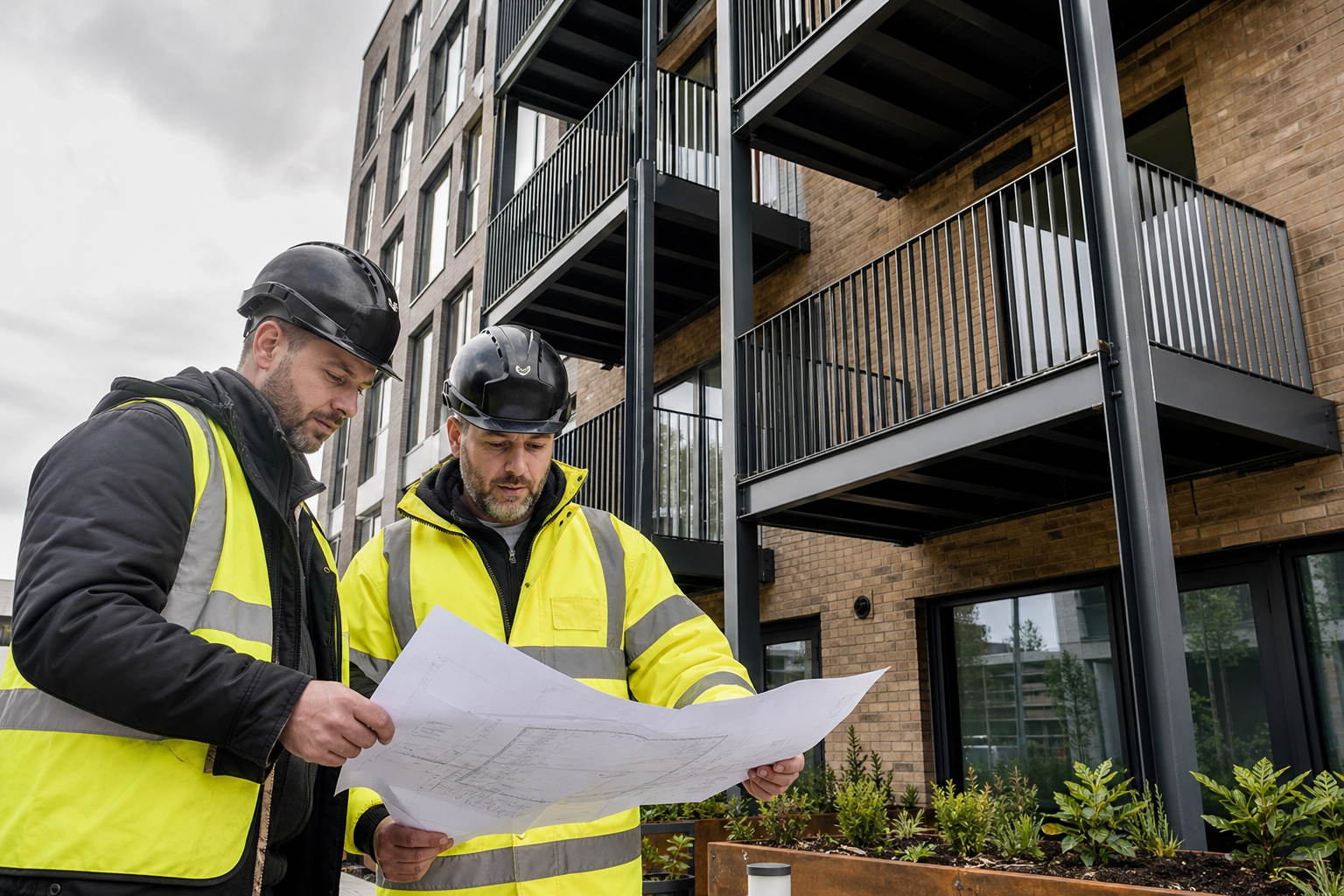
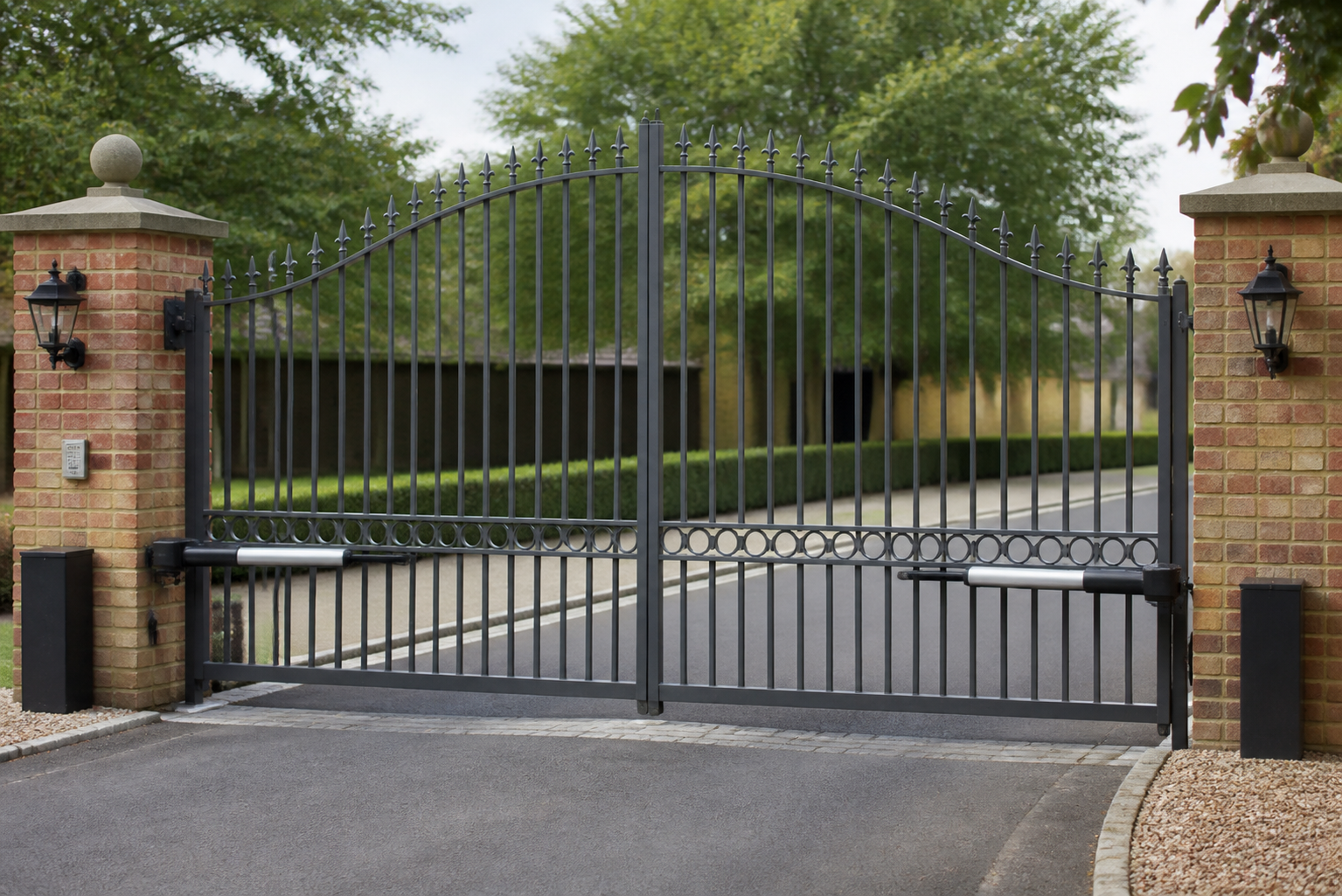
We are based in Steeple Morden, Royston, and specialise in bespoke stainless steel and sheet-metal work for commercial clients and local customers. Beyond individual parts, we design, manufacture and install a wide range of fabricated products, including point-of-sale display units for retailers, automatic gates and railings, steel staircases and structural steelwork.
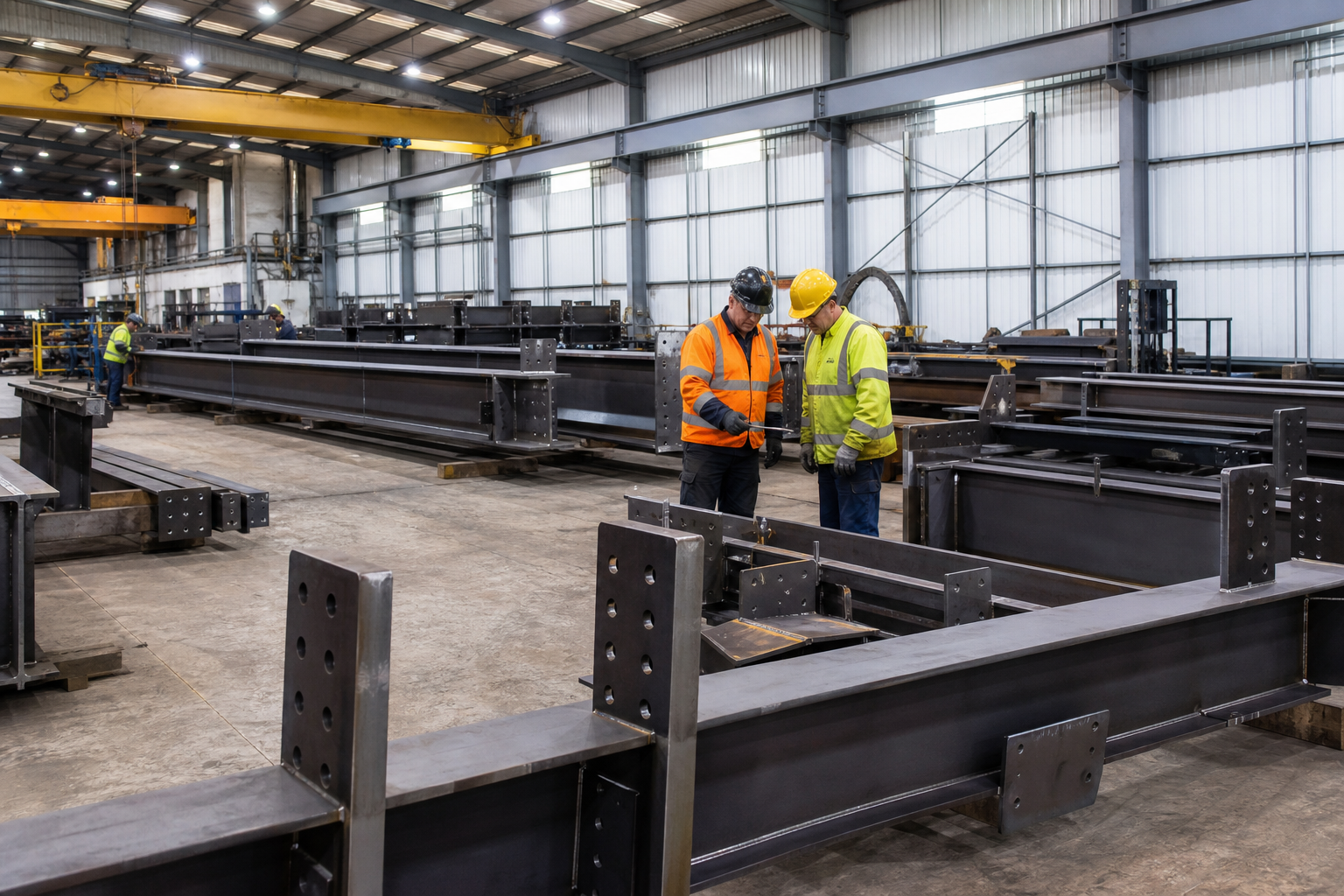
That wider experience matters because many commercial sheet metal jobs do not stop at the first manufacturing stage. A component may need to work within a larger fabricated assembly, or the project may require practical input on how the part will be made and used. Our in-house machining and toolmaking capability also allows us to engineer solutions for complex jobs and make specialist tools where needed.
Above all, we focus on practical, reliable solutions and take responsibility for the whole project from design to installation where required. For buyers who want fewer handovers and clearer accountability, that can be a real advantage.
Frequently Asked Questions
What is CNC punching used for in sheet metal fabrication?
CNC punching is commonly used to produce repeated holes, slots, cut-outs and other programmed features in sheet metal. It is often a practical choice for commercial parts such as brackets, panels, covers, housings and display components where consistency matters.
Is CNC punching suitable for small commercial batches?
It can be, depending on the drawing, material and how the part fits into the wider project. The best approach is to share the part details and expected quantities so the most practical manufacturing route can be discussed.
Can one supplier handle punching, machining and wider fabrication?
Yes. Steeple Fabrications Ltd provides sheet-metal work alongside metal fabrication, with in-house machining and toolmaking available for more complex requirements. That can help keep commercial projects better coordinated when several processes are involved.
What should I send for a sheet metal fabrication quote in Royston?
Start with drawings or specifications, material details if known, quantities, any critical dimensions or features, and your required timeframe. If the parts belong to a larger fabricated item, include that context too.
Do you only work on large commercial fabrication projects?
We specialise in bespoke stainless steel and sheet-metal work for commercial clients and local customers. If you have a project in or around Royston and need practical advice on the best route, we can review the requirement and discuss the next step.
Discuss Your Sheet Metal Fabrication Requirements
If you are planning a commercial project and need dependable sheet metal fabrication Royston support, the right starting point is a proper review of the drawings and how the part will be used. CNC punching can be an excellent choice when the job suits it, especially where repeatability, coordination and wider fabrication all matter.
Send Steeple Fabrications Ltd your drawings or specifications through our website to discuss your sheet metal fabrication requirements and the most practical route for your project.